
Wood, Metal, Upholstered or Leather? Choosing the Right Dining Chair for Your Lifestyle
Choosing a dining chair seems simple—until you actually start shopping.
You may begin with a general idea of the look you want, only to discover an enormous selection of wood dining chairs, metal dining chairs, upholstered dining chairs, and leather dining chairs. Then the practical questions begin. Will that beautiful fabric survive children? Will a solid wood chair be comfortable enough for long dinners? Is leather difficult to maintain? Will metal chairs make the room feel too cold?
The best dining chair isn’t necessarily the one that looks best in a photograph. It’s the one that fits the way you actually live.
For some households, the dining table is used primarily for dinner. For others, it’s the center of the home—a place for meals, homework, board games, holiday gatherings, paperwork, crafts, and long conversations. A household with young children has different needs than a couple that entertains frequently, and someone furnishing a formal dining room may prioritize different features than someone creating an everyday breakfast area.
That’s why material matters.
Each type of dining chair offers a different combination of comfort, durability, maintenance, style, and versatility. Understanding those differences can help you choose chairs you’ll be happy to live with for years.
Wood Dining Chairs: Timeless, Versatile and Durable
There is a reason wood dining chairs remain one of the most popular choices for dining rooms and kitchens. Wood is remarkably versatile.
Depending on the finish and design, a wooden chair can look traditional, rustic, farmhouse-inspired, transitional, contemporary, or even modern. The same basic material can produce dramatically different results.
A substantial wood chair with a rich finish can anchor a traditional dining room, while a lighter finish and streamlined silhouette can feel casual and contemporary. Distressed finishes create a relaxed character, while darker stains often lend themselves to more formal spaces.
Wood also has the advantage of visual longevity. Trends in furniture come and go, but well-designed wooden dining chairs rarely look completely out of place.
Are Wood Dining Chairs Practical for Families?
For households with children, wood has an obvious advantage: it’s relatively easy to clean.
There are no upholstered seat cushions to catch crumbs or absorb spills. Everyday messes can generally be wiped away quickly, making solid wood seating a practical choice for breakfast rooms, kitchens, and everyday dining spaces.
Wood chairs can also withstand years of regular use when properly constructed and maintained.
The tradeoff is comfort.
A solid wood seat won’t provide the cushioning of an upholstered chair. For quick family meals, that may not matter. But if your family regularly spends an hour or two around the table playing games, talking, or entertaining guests, seat comfort deserves more consideration.
One solution is a wood chair with a shaped seat or supportive back. Another is choosing a chair that combines a wood frame with an upholstered seat.
Metal Dining Chairs: Strong, Stylish and Surprisingly Versatile
Metal dining chairs aren’t limited to restaurants or industrial lofts.
Today’s metal dining chairs range from sleek contemporary designs to traditional styles that combine metal frames with wood, upholstery, or decorative details.
Metal can be particularly effective in casual dining areas because it adds visual contrast. A room filled entirely with wood furniture can sometimes feel heavy. Introducing metal through the dining chairs can break up those surfaces and create a more layered design.
Metal chairs also pair well with many dining table materials.
A metal chair with a wood seat can complement a farmhouse table. A streamlined metal frame can provide contrast beside a substantial wood table. Mixed-material chairs can also help tie together different finishes already present in an open-concept kitchen and dining area.
Durability Is a Major Advantage
For busy households, durability is one of metal’s greatest strengths.
A quality metal frame can tolerate frequent use and generally requires little maintenance. This makes metal seating worth considering for families, breakfast areas, game rooms, and casual entertaining spaces.
The key is choosing a design appropriate for the room.
An all-metal chair can create an intentionally industrial or contemporary look, but it may feel visually stark in a warmer, more traditional home. Chairs that combine metal with wood or upholstery can offer a softer alternative while retaining the durability of the frame.
As with solid wood chairs, comfort varies considerably by design. Pay attention to the shape of the back, the seat material, and whether the chair will be used for quick meals or long evenings around the table.
Upholstered Dining Chairs: Comfort Comes First
If you want people to settle in and stay awhile, upholstered dining chairs are difficult to beat.
Padding on the seat—and often the back—makes a noticeable difference during long dinners, holiday meals, game nights, and conversations that continue long after dessert has been served.
Upholstery also introduces softness into a room dominated by hard surfaces.
Dining rooms naturally contain a lot of wood, glass, stone, and metal. Fabric seating can soften those materials while adding color, pattern, and texture.
This is particularly useful in open-concept homes. Upholstered dining chairs can visually connect the dining area to nearby sofas, accent chairs, rugs, or window treatments without requiring everything to match.
The Practical Side of Upholstery
The obvious concern is maintenance.
Food and fabric aren’t always the easiest combination, particularly in a household with children. That doesn’t mean families need to avoid upholstered dining chairs altogether.
The type of upholstery matters enormously.
Performance fabrics and other durable upholstery options can make upholstered chairs much more practical for everyday use. Patterns, textures, and medium-toned fabrics may also disguise the inevitable signs of family life better than very light solid colors.
Think realistically about your household before choosing.
If spaghetti night regularly ends with evidence under the table, delicate pale upholstery probably isn’t your best choice for everyday dining. If the chairs will primarily be used by adults in a separate dining room, you may have far more freedom.
Furniture should work with your life—not require everyone in the household to reorganize their behavior around the furniture.
Leather Dining Chairs: Comfort With Easygoing Sophistication
Leather dining chairs occupy an interesting middle ground.
They provide much of the softness and comfort associated with upholstered seating while offering a completely different appearance and maintenance profile.
Leather can bring warmth and richness to a dining room. Depending on the chair’s shape and frame, it can feel traditional, rustic, industrial, transitional, or contemporary.
It can also age beautifully.
Rather than simply looking worn, quality leather can develop character over time. For people who prefer furniture that looks lived-in rather than pristine, that can be part of the appeal.
Is Leather Good for Everyday Dining?
Leather can be an excellent option for frequently used dining spaces because spills generally remain on the surface long enough to be wiped away rather than immediately soaking into fabric.
That doesn’t mean leather is maintenance-free. It should be cared for according to the manufacturer’s recommendations, and sharp objects, pet claws, direct sunlight, and excessive heat can potentially damage it.
Still, for many households, leather offers an appealing balance between comfort and practicality.
It’s especially attractive for homeowners who want upholstered seating but are hesitant about maintaining fabric around food.
What About Faux Leather and Performance Materials?
Dining chair choices aren’t limited to the four traditional categories.
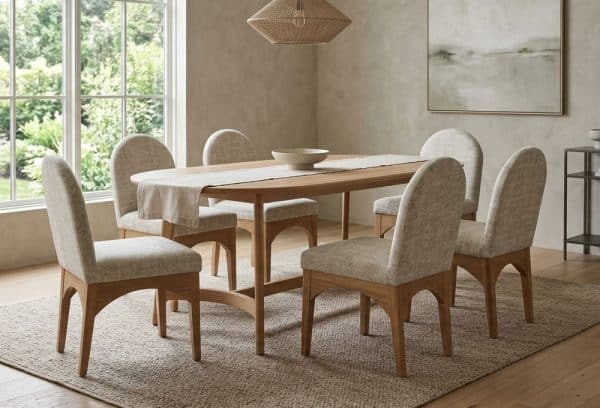
Modern furniture often combines materials or uses alternatives designed to offer particular practical advantages. Faux leather, performance fabrics, wood-and-metal combinations, and upholstered chairs with exposed wood frames can provide a balance that a single material can’t.
This is why it’s useful to begin with your lifestyle rather than a rigid idea of which material you “should” buy.
You may discover that your ideal chair is technically a wood chair but has an upholstered seat. Or perhaps a metal frame with a wood seat gives you exactly the combination of durability and warmth you want.
Mixed materials can also make it easier to coordinate dining furniture without purchasing a completely matching set.
Think About How Long You Actually Sit at the Table
One of the most overlooked considerations when choosing dining chairs is how the dining table is used after the meal is over.
Some families finish dinner and immediately move into the family room. Others remain around the table for hours.
If your dining area is regularly used for homework, card games, puzzles, family discussions, or entertaining, comfort should move much higher on your priority list.
A chair that feels perfectly acceptable for 20 minutes may become uncomfortable after two hours.
Seat padding is only part of the equation. Back height, back shape, seat depth, arm placement, and overall proportions all influence comfort.
This becomes especially important when choosing chairs online. Look closely at dimensions rather than judging scale solely from photographs.
Consider Kids, Pets and Everyday Reality
Furniture showrooms are beautifully controlled environments. Homes aren’t.
Children spill drinks. Pets shed. Someone drags a chair instead of lifting it. Holiday guests squeeze another person around the table. Backpacks land where they aren’t supposed to.
Your dining chairs need to survive your version of everyday life.
For households with young children, easy-clean surfaces such as wood, metal, or leather may have an advantage. Families that prioritize comfort may prefer durable upholstery designed for frequent use.
Pet owners should think about more than shedding. Cats may be attracted to certain fabric textures, while claws can damage leather. The right answer depends on your pets and how they interact with furniture.
There is no universally “kid-proof” or “pet-proof” dining chair. The goal is simply to choose materials that minimize the maintenance issues most likely to occur in your household.
Your Dining Chairs Don’t Have to Match Your Table
Another common assumption is that dining chairs need to match the dining table exactly.
They don’t.
In fact, combining complementary materials can often create a more interesting room.
A substantial wood dining table can look beautiful with upholstered chairs. A rustic table can gain sophistication from leather seating. Metal chairs can give a traditional wood table a more casual or updated personality.
You can even mix chair styles around the same table.
One popular approach is using one style of side chair along the length of the table and different host chairs at each end. Upholstered or leather chairs at the ends can add comfort and visual weight while simpler wood or metal chairs keep the rest of the arrangement from feeling too heavy.
The important thing is creating a relationship between the pieces. Repeating a finish, color, shape, or design detail can make intentionally different furniture feel connected.
Don’t Forget Chair Size and Table Clearance
Material and style get most of the attention, but dimensions can determine whether dining chairs actually work.
Before purchasing, measure your table and consider both the width and depth of the chairs.
How many chairs can comfortably fit along each side? Will chair arms slide beneath the tabletop? Does the table have an apron that reduces leg clearance? Will people have enough room to pull their chairs back without hitting a wall or another piece of furniture?
Armchairs generally require more room than armless chairs, and heavily upholstered designs may have a larger footprint than streamlined wood or metal chairs.
More chairs aren’t always better. Four or six comfortably spaced chairs will usually create a more inviting dining area than squeezing in additional seating that makes everyone feel crowded.
Which Dining Chair Material Is Right for You?
There isn’t one winner in the debate between wood, metal, upholstered, and leather dining chairs.
The right choice depends on what matters most in your home.
If easy cleaning and timeless versatility are priorities, wood may be an excellent choice. If durability and a lighter visual profile matter, consider metal. If long-term sitting comfort is essential, upholstery deserves serious consideration. If you want comfort with a rich appearance and relatively easy cleanup, leather may offer the balance you’re looking for.
And don’t overlook chairs that combine several materials.
Ultimately, choosing dining chairs is less about following decorating rules and more about understanding how your household uses the dining space.
Choose Dining Chairs for the Life You Actually Live
A dining chair can look spectacular and still be completely wrong for your home.
The best chairs balance style, comfort, durability, and everyday practicality. They fit your table, complement your room, accommodate the people who use them, and don’t make you nervous every time someone sits down with a plate of food.
Your dining room isn’t a furniture showroom. It’s a place where life happens.
Choose chairs that are ready for it.